A dynamometer
in your pocket.
Drag races, any-speed splits, and a full road dyno, all powered by TracQi TrueNorth, our sensor-fusion system. Use the phone you already own to measure real horsepower and torque on real roads.
Stop trusting your butt dyno.
Every run gets adjusted for weather conditions and compared against your vehicle's past runs, so DragStar can tell the difference between a real improvement and just a lucky cold morning. That way you know whether the money you spent actually added power.
- Baseline HP, torque, and trap speed
- Where in the RPM band is the power?
- Save every run with weather conditions from day one
- Intake, exhaust, E85, or a new tune
- Bigger turbo, water-methanol, gearing
- One change at a time, so you know what boosted performance
- Did it actually add power, SAE-corrected?
- Or did a cold day just flatter the numbers?
- Overlay before and after on one curve
A dyno is just an accelerometer.
Strip away the rollers and a chassis dyno is fundamentally a sensor measuring acceleration, deriving torque from it, then horsepower from torque and RPM. Your phone measures acceleration too. Add vehicle weight, drag coefficient, tire size, and gearing, and it becomes a repeatable road dyno.
- Measures real load, friction, weather, and incline
- The exact conditions your engine actually tunes for
- Repeatable, on any road, for free
- SAE-corrected for apples-to-apples comparison
- Clean-room conditions with real-world load removed
- Tuning there can be risky unless extremes are simulated
- Some real conditions can not be reproduced at all
- $100-150/hr, and you have to drive to it
Chassis dynos have their place, but they are not strictly better. Weather, altitude, fuel, and load are what your engine faces every day. DragStar measures power where it happens, then normalizes it so you can compare across seasons.
Drag. AnySpeed. Dyno.
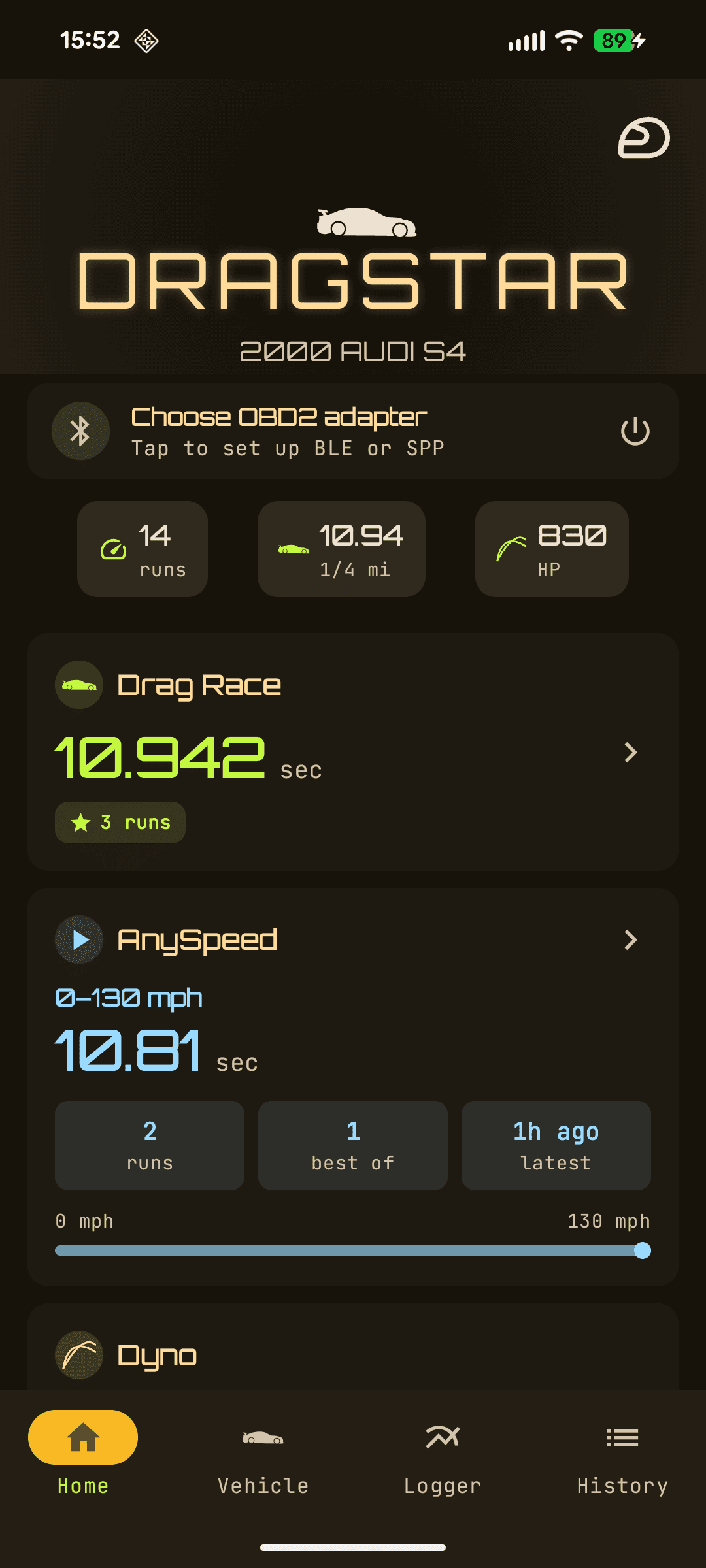
One sensor system, three ways to test. Each one captures the same fast, detailed TrueNorth data and saves the run to your vehicle's history so you can compare them.
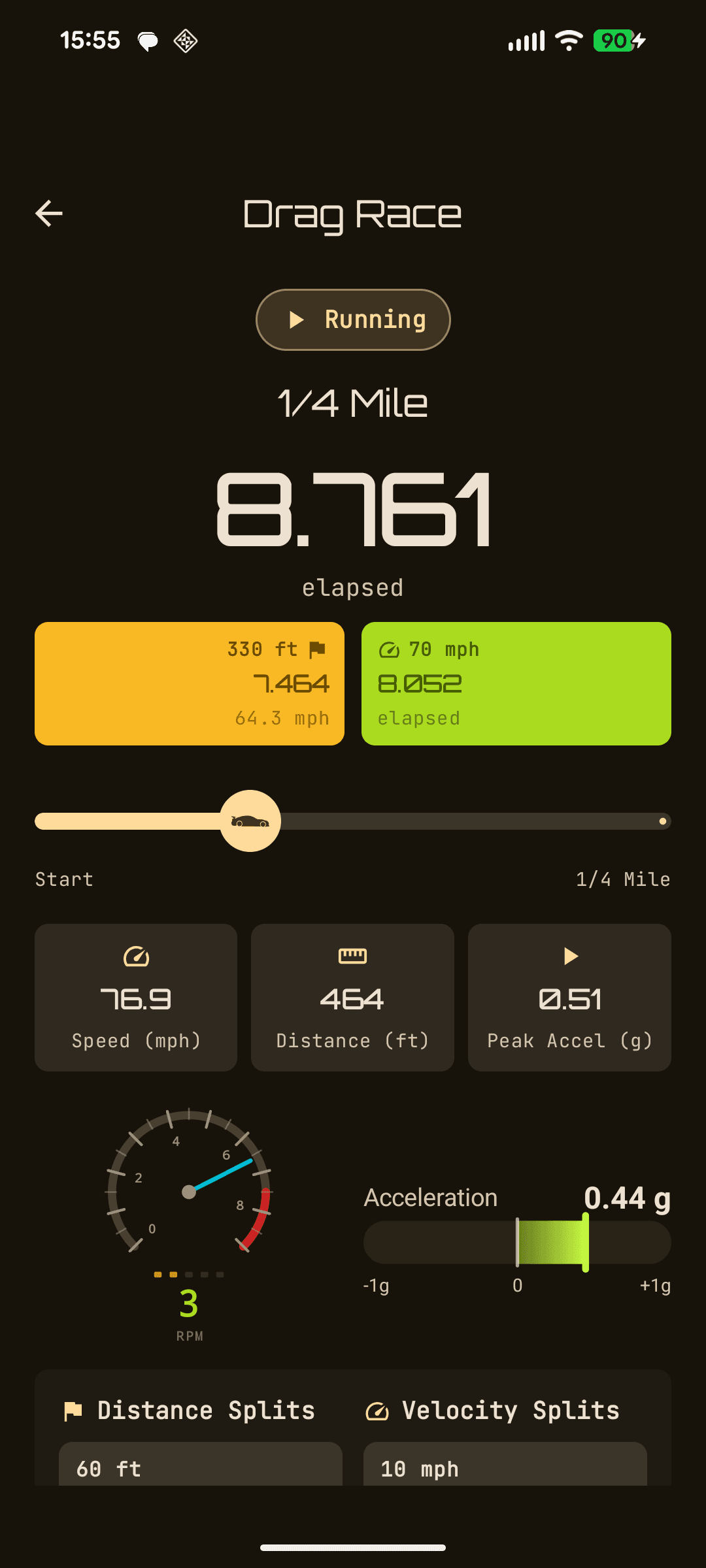
- 60-ft, 330-ft, 1/8-mile, and 1/4-mile splits
- Live distance and velocity splits
- Trap speed and elapsed time, to the millisecond
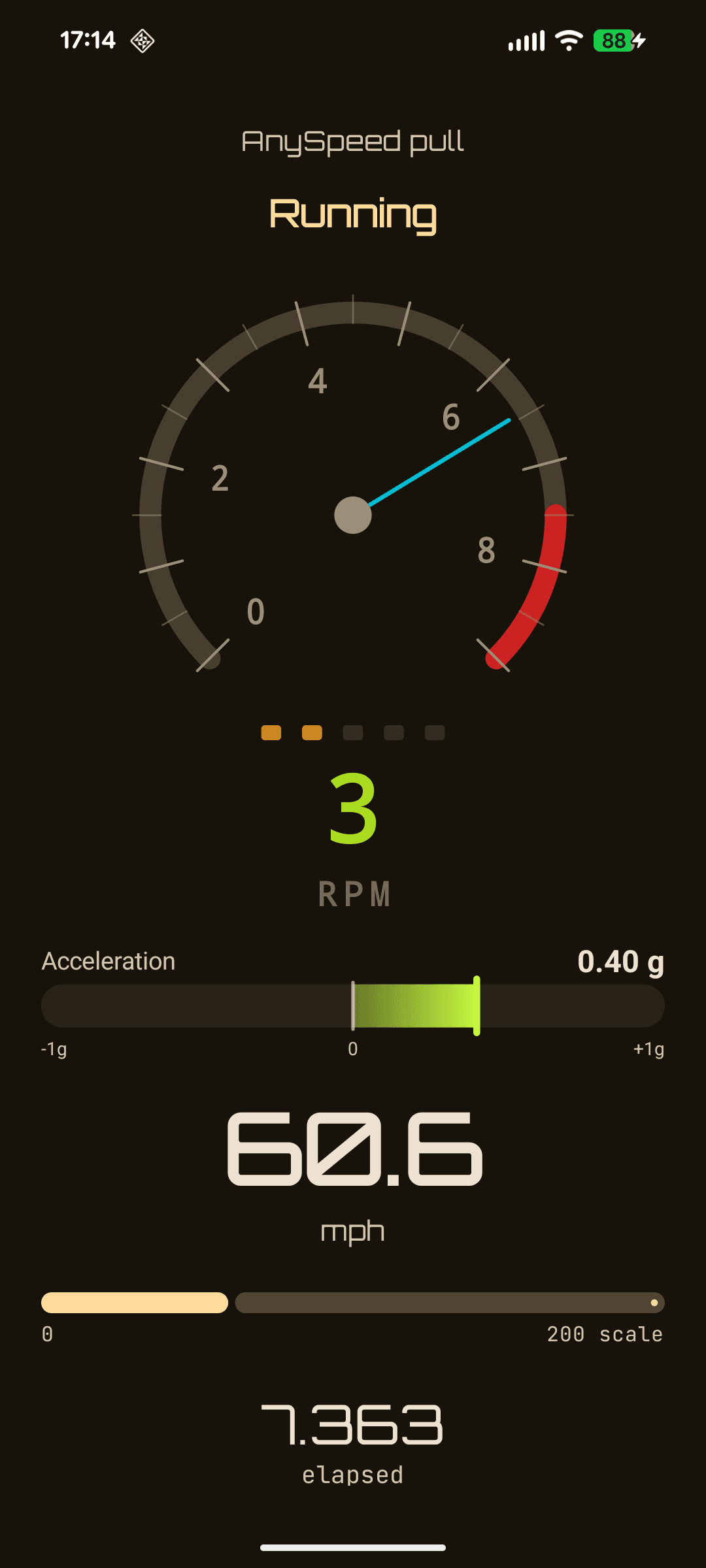
- 0-60, 0-130, 60-130, or your own window
- Live g-force and speed through the pull
- Compare every run head-to-head
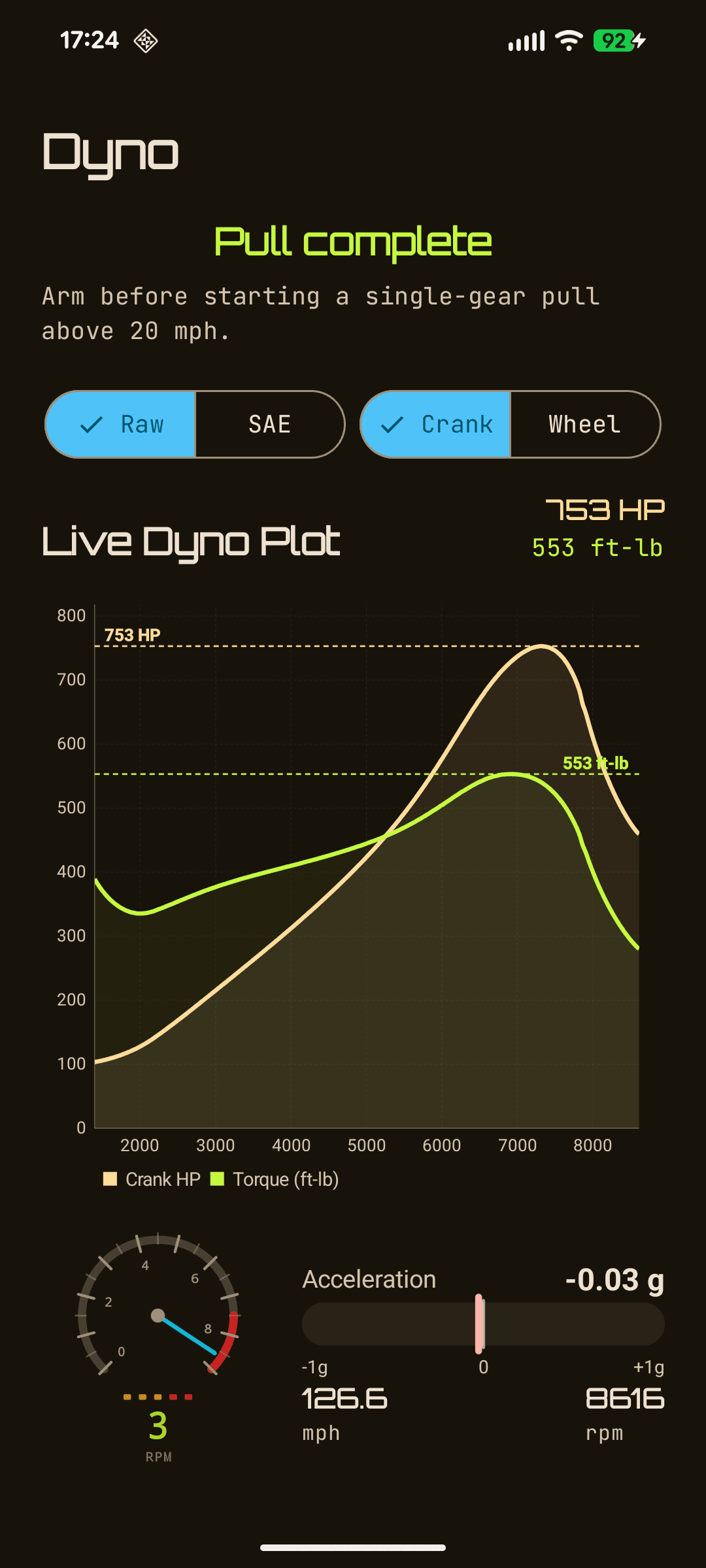
- Live HP and torque curves on a single-gear pull
- Raw or SAE-corrected, crank or wheel
- Peak HP and torque with full curve history
Once-a-second GPS is not enough.
TrueNorth uses the whole phone.
Most phone apps turn a drag run into connect-the-dots at 1Hz: one GPS hit, a one second stretch, then another GPS hit. At highway speed, a vehicle can cover over 100ft per second. TrueNorth fills those gaps with live motion data from your phone, so DragStar can see the start, the finish and every point in-between.
A drag run comes down to fractions of a second, and a dyno pull depends on smooth, clean acceleration. Once-a-second GPS is too slow to catch any of that. TrueNorth blends your phone's sensors into a fast, detailed readout that can.
Lower error means the measured path is closer to where the car actually went. More samples per second capture short changes that once-a-second GPS misses.
Turn your phone into a dynamometer and a drag strip, and make every modification prove itself.